What happens to 'hikikomori' when their parents pass away?
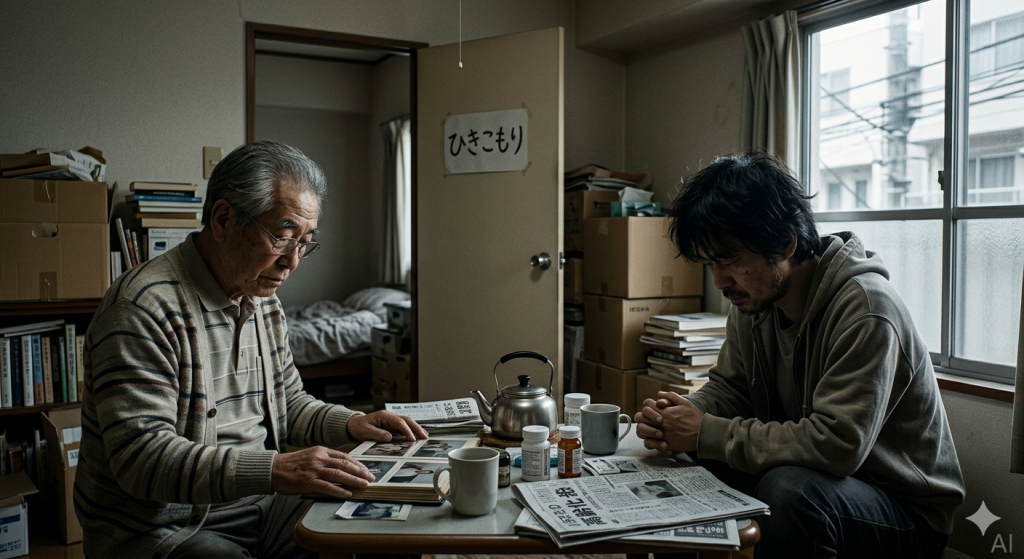
In Japan, the term hikikomori has evolved from a niche sociological observation into a nationwide crisis that defies simple translation. Born from the economic stagnation of the „Lost Decade,” a generation of young adults retreated into their bedrooms, shutting out a world that seemed to offer no place for them. But time, unlike the Japanese economy, has never stood still. Those who were twenty-year-old recluses in the 1990s are now entering their fifties, while the parents who have quietly supported them for decades are crossing into their eighties.
This is the grim reality of the „8050 problem”—a demographic collision where aging parents and their middle-aged, socially withdrawn children face an uncertain and often desolate future.
Recent reports from Spa! magazine highlight a harrowing shift: the silent safety net is tearing. As parents pass away, these „lifelong children” are being thrust into a world they haven’t navigated in thirty years. From the squalor of tobacco-stained apartments to the crushing isolation of digital addiction, the transition is rarely a success story. For many, the death of a parent isn’t just a personal tragedy—it is the moment their fragile survival strategy collapses into crime, poverty, or total societal displacement.
With an estimated 1.5 million people now living in isolation—roughly one in fifty Japanese citizens—the question is no longer just how they withdrew, but what happens to the nation when they are finally forced to step outside into a world they no longer recognize.
What happens to 'hikikomori' when their parents pass away?
słówka:
What happens to 'hikikomori' when their parents pass away? – słówka